
The Writing test, originally a 30-minute test at the end of the ACT will be changing. How, you might ask? The ACT has not divulged this information; however, the ACT will be distributing new essay prompts that should dispell this question soon.
Science, Technology, Engineering and Math score designed to show a student how they generally rate in the Math and Science world. Score ranges have not been published to the public yet.
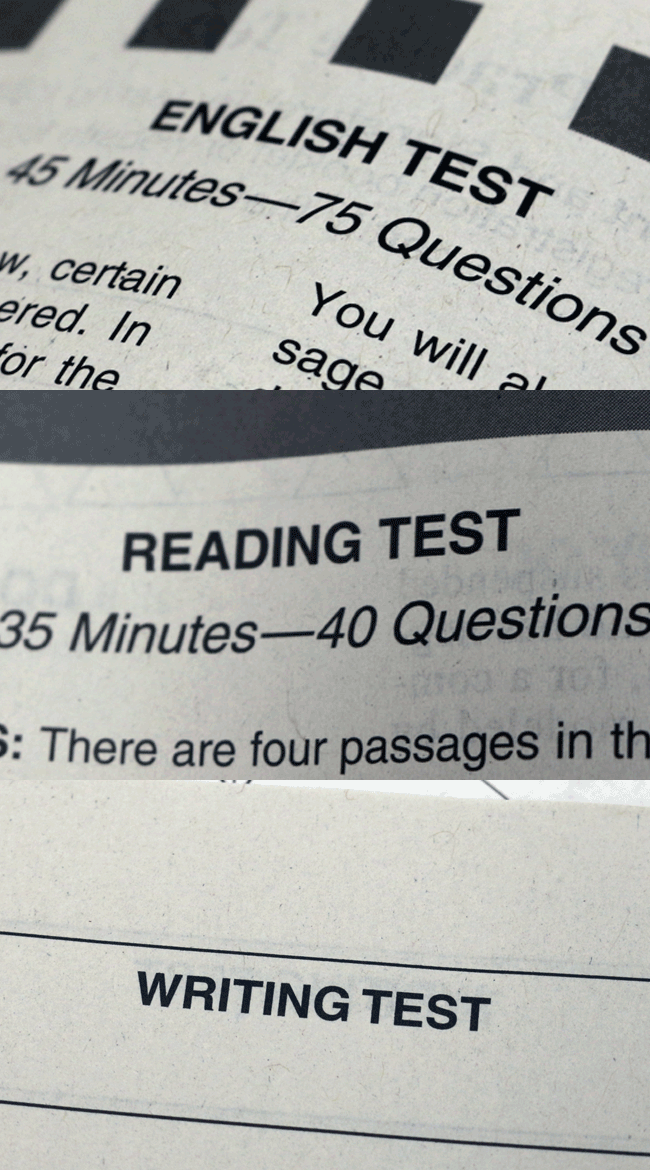
This change will combine the literal arts into one score that is intended for quicker, general analysis of the 3 topics. Score ranges have not been published to the public yet.

Students will be given career readiness and text complexity progress indicators on top of the original scores (English, Math, Reading, Science, Essay). These indicators will help employers and lay people understand in english (rather than by a number between 1 and 36) what these scores say about strengths and weaknesses of your student.
The ACT will be implementing computer testing for the ACT in 2015; however, there is speculation that this option will actually arrive during the 2015 school year. If implemented, you'd have the option to take the test on a computer or via same pencil-to-paper method. If by computer, instead of marking bubbles on a piece of paper, you'd be bubbling multiple choice boxes with a click of the mouse and moving objects to form conclusions.
Below, is an excerpt from an article in the New York Times:
"...Starting in 2015, the ACT will be available on a computer as well as, for the time being, on paper. Those who take the test on a computer will see a new breed of questions — free-response questions in which students manipulate on-screen images to form their conclusions. In one sample question, students move a plunger on a cylindrical gas tank to change gas pressure and temperature. They then write a few sentences describing the relationship between distance and pressure and between temperature and pressure, and graph those relationships.
In another question, students “pour” four different liquids into beakers to see which one rises to the top and which one sinks to the bottom. Based on their experimentation, they predict what would happen if all four liquids were combined."
